



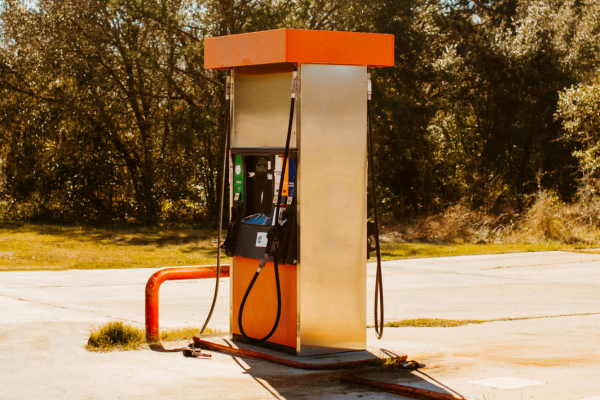
You're in a hurry. You pull up, tap your card, and get back in the car before the tank is full. It takes maybe 90 seconds. That's also about how long it takes a skimmer to do its job.
Gas pumps are one of the most targeted spots for card skimming, and for good reason. The transactions are fast, unsupervised, and happen hundreds of times a day at a single station. Criminals know this. They also know most people never look twice at the pump before they swipe.
A few things you can check in under a minute make a real difference.
Look at the security seal first
This one surprises most people. Many pumps have a paper security seal placed over the cabinet seam, which is the gap where the front panel of the pump can be opened. It usually says something like "Void if broken" or "Security seal." If that seal is torn, peeled, or shows a checkerboard "VOID" pattern, someone has opened that cabinet.
That's not a guarantee that a skimmer was installed, but it's a strong enough signal to use a different pump or go inside to pay. A seal in good condition doesn't guarantee you're safe either, but a broken one is a clear warning sign worth taking seriously.
Check for anything that doesn't belong on the card reader
Skimmers are increasingly sophisticated, but a physical overlay on the card slot is still common. Run your finger along the edges of the card reader and give it a gentle tug. A legitimate reader is solid and fixed. If any part feels loose, moves, or seems layered on top of the original, don't swipe.
Also, scan the keypad. Some setups include a thin overlay on top of the real keypad to capture your PIN. If the keypad feels raised, spongy, or different from what you'd expect, trust that.
Check the pump number and pick one in view of the attendant
Skimmers are more often placed on pumps that are harder to monitor. That means pumps around the side of a building, near the back of a lot, or far from the cashier's line of sight. If you have a choice, use a pump closer to the store entrance where there's more foot traffic and easier visibility.
Pay inside when you can
Paying at the counter is still the most reliable way to avoid pump skimmers. If that's not practical, use a credit card instead of a debit card when possible. With a debit card, a compromised PIN gives direct access to your checking account. With credit, you have more dispute protections, and the money isn't gone while you're sorting it out.
Contactless payment is another solid option. Tap-to-pay from your phone or a card with NFC doesn't pass card data through a physical reader, so a skimmer can't capture it.
Check your account regularly
Even if you do everything right, it's worth making a habit of reviewing your transactions after filling up. If something looks off, an unfamiliar charge or a transaction you don't recognize, report it quickly. The sooner you catch it, the better your chances of a full resolution.
In Digital Banking, you can set up real-time transaction alerts. It takes a few minutes to configure and gives you eyes on your account without having to log in every day.
None of this takes long. A quick look at the seal, a tug on the reader, and a choice to tap or go inside when you can. Those small habits add up. The people placing skimmers count on rushed, distracted customers. Taking 30 seconds to look changes that equation.
If you ever notice something suspicious at a pump, report it to the station and contact your card issuer. And if you think your card may have been compromised, call us or visit a financial center, and we'll take it from there.